
One Year After the LA Fires: What Recovery Looks Like Now
As we mark one year since the Eaton and Palisades fires, recovery remains a defining part of daily life for tens of thousands of survivors. The loss was immediate and profound; the recovery that followed has been slower, more complex, and far more uneven than many anticipated.
This moment is not defined by either triumph or tragedy alone. It is the truth of collective endurance—of survivors who have carried extraordinary burdens for a full year, and of communities that have shown up for one another in powerful ways when systems fell short.
Looking Back: What Survivors Have Endured
The fourth Community Voices: LA Fire Recovery Report builds on three earlier surveys that documented the early months of displacement, loss, and uncertainty. One year on, the data tell a more nuanced story, one in which some progress is visible but the underlying challenges remain deeply entrenched.
Seven in 10 survivors are still not back home. While small increases in homecomings in Altadena and Pacific Palisades offer cautious encouragement, overall housing stability has barely shifted since September.
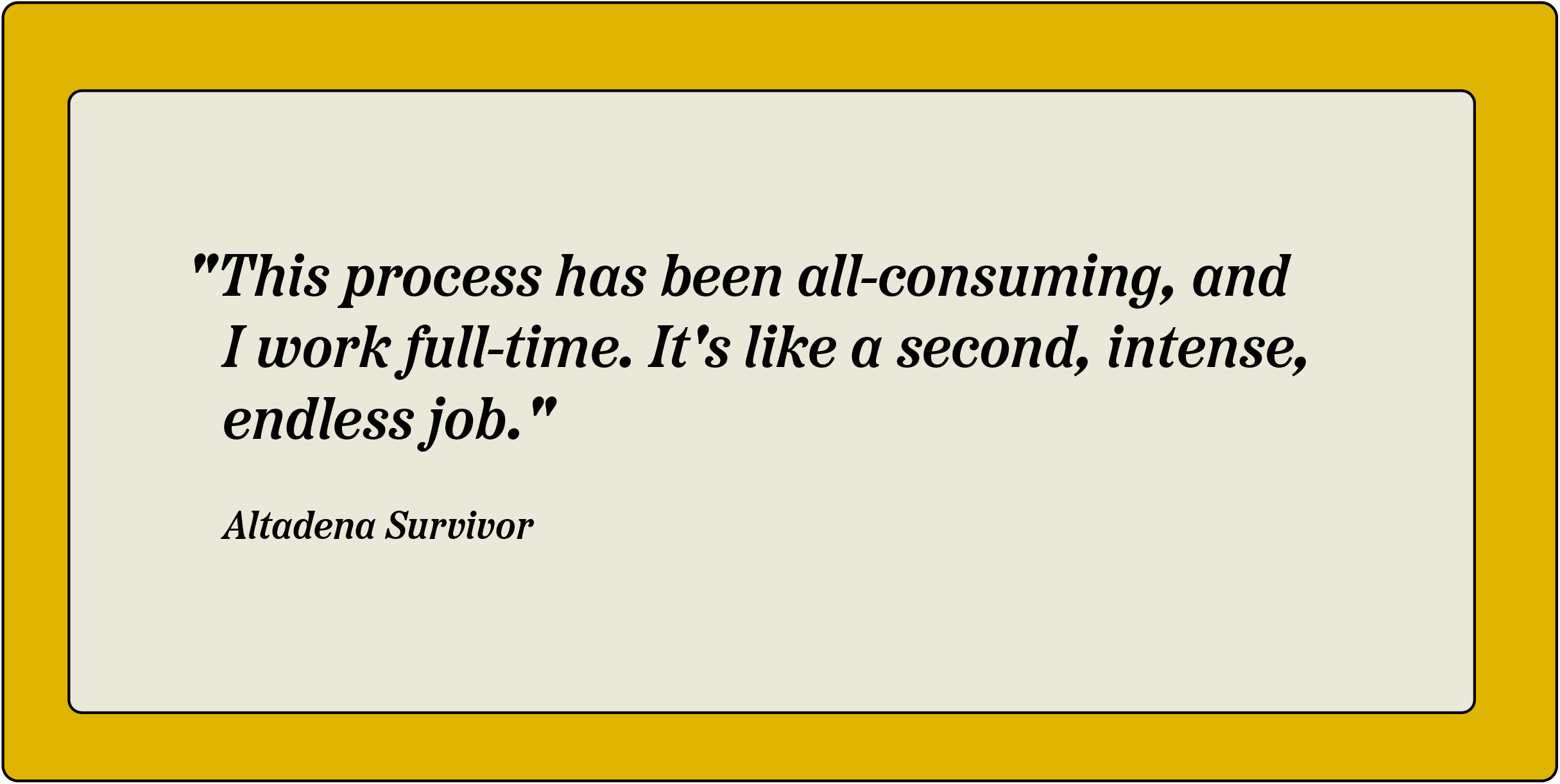
More survivors are reaching the end of their displacement insurance each month, and growing numbers have already run out, leaving families with fewer options and more uncertainty.
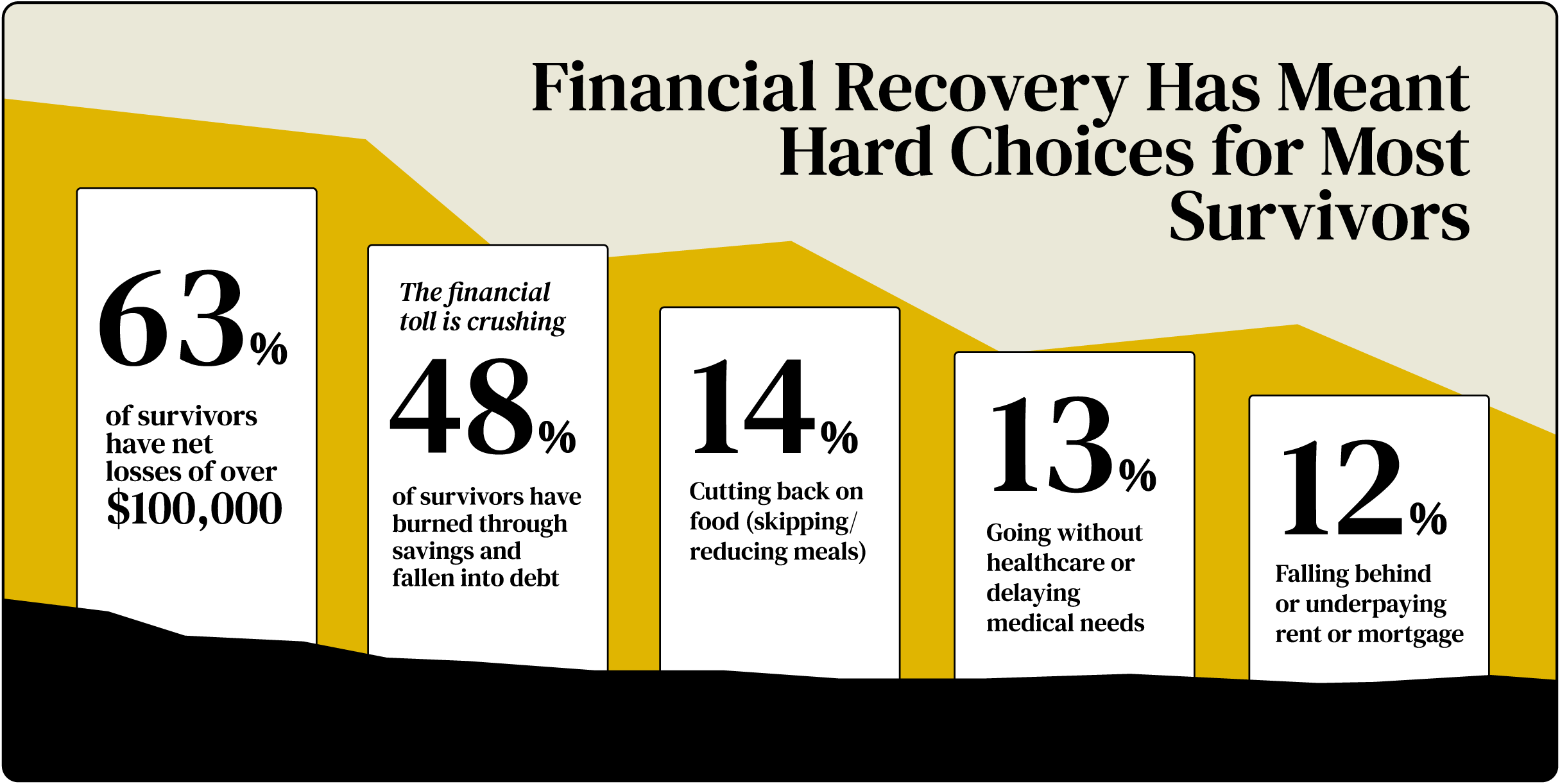
Financial strain has intensified.
Nearly half of survivors have depleted their savings, and many–particularly people of color and single-parent households—are cutting back on food, falling behind on bills, or taking on additional work just to get by.
These disparities are stark: Black and Latino survivors are two to three times more likely than white survivors to experience the most severe hardships, including housing instability and food insecurity.
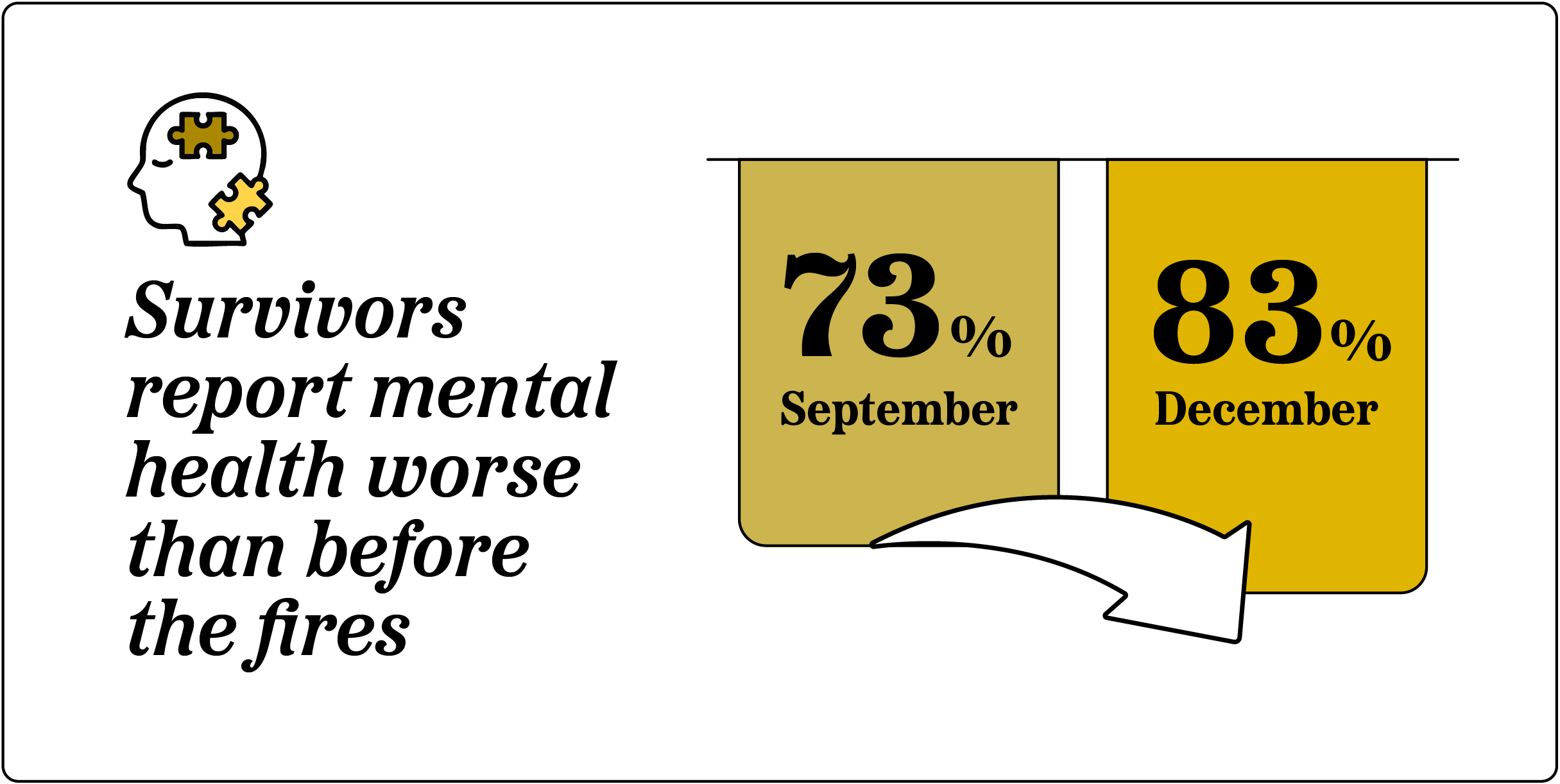
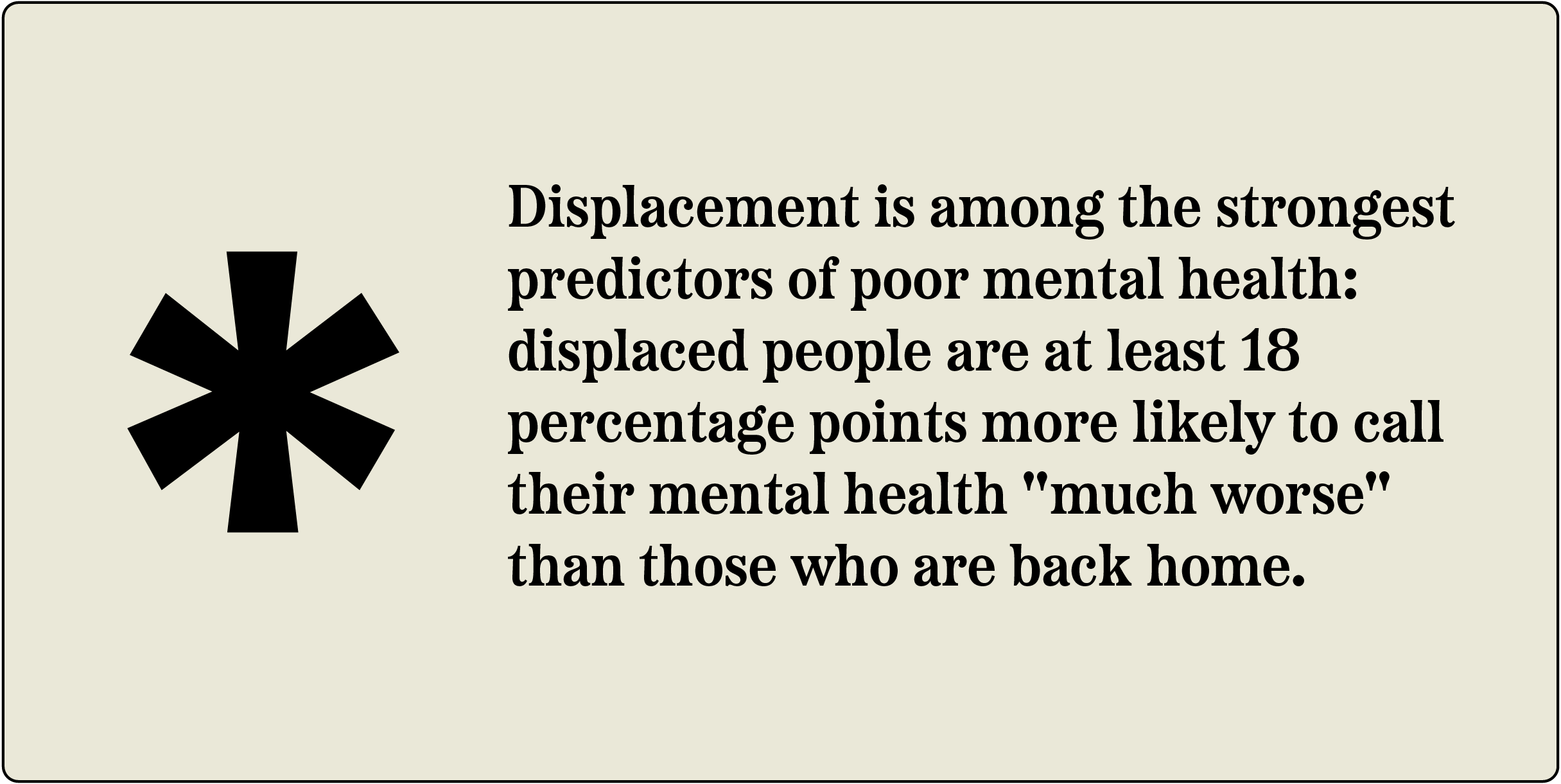
Mental health has also sharply declined. More than 8 in 10 survivors now say their mental health is worse than before the fires, with nearly half reporting it is much worse—an increase since September.
These challenges are not abstract. They shape whether families can stay housed, feel safe in their homes, or plan for the future at all.
What We’ve Accomplished Together
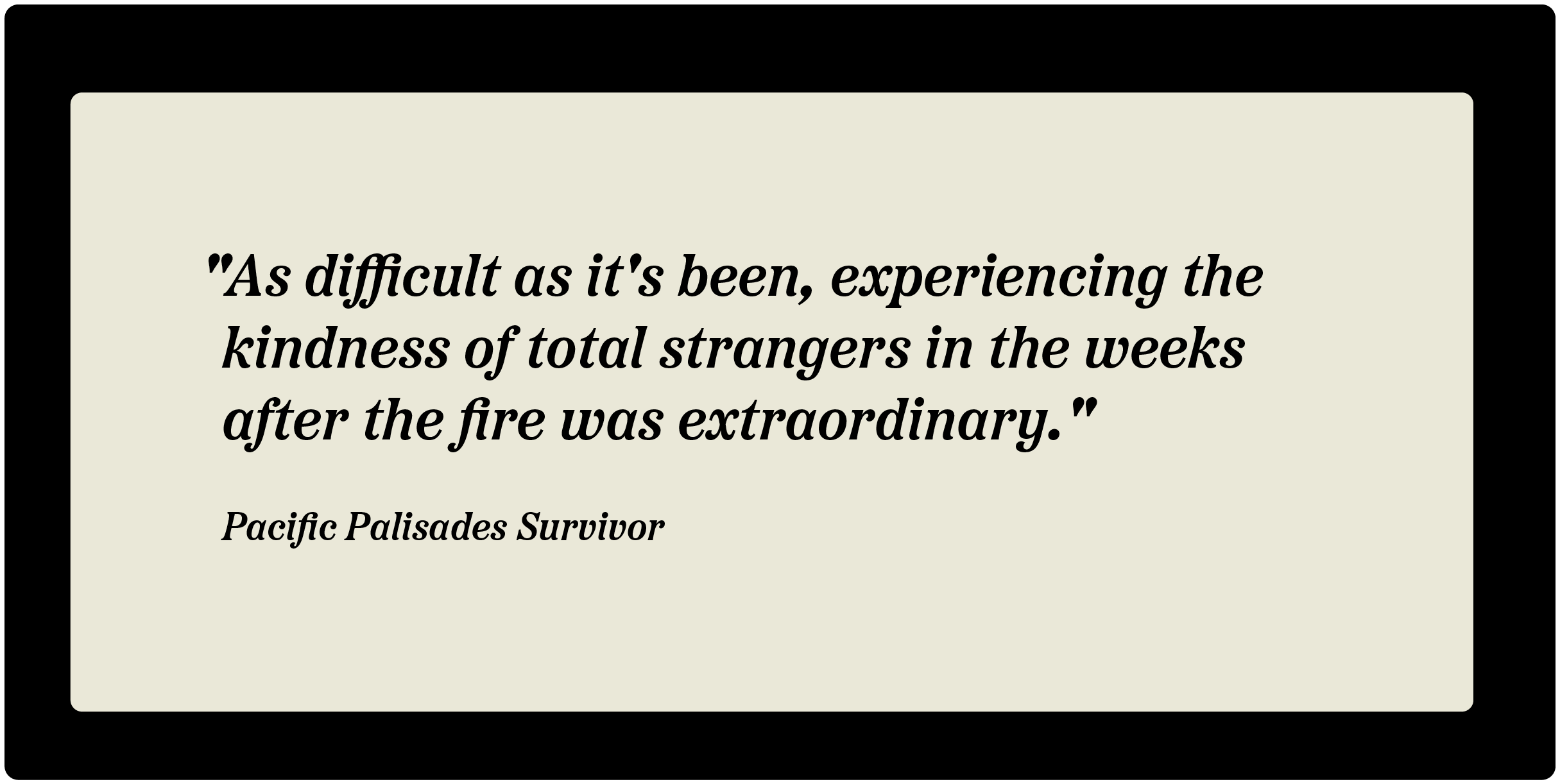
Alongside these challenges, survivors describe an extraordinary outpouring of care. Neighbors sheltered neighbors. Volunteers stepped in. Grassroots groups organized food, supplies, information, and emotional support. Philanthropy moved quickly to fill gaps, and local leaders worked to unblock processes and respond to urgent needs.
Community-based organizations and survivor-led networks continue to be the most trusted sources of support and information—a powerful reminder that recovery is something we build together, not something survivors should have to navigate alone.
This collective response has helped create openings for progress, even as the scale of need remains immense.
The Work Still Ahead
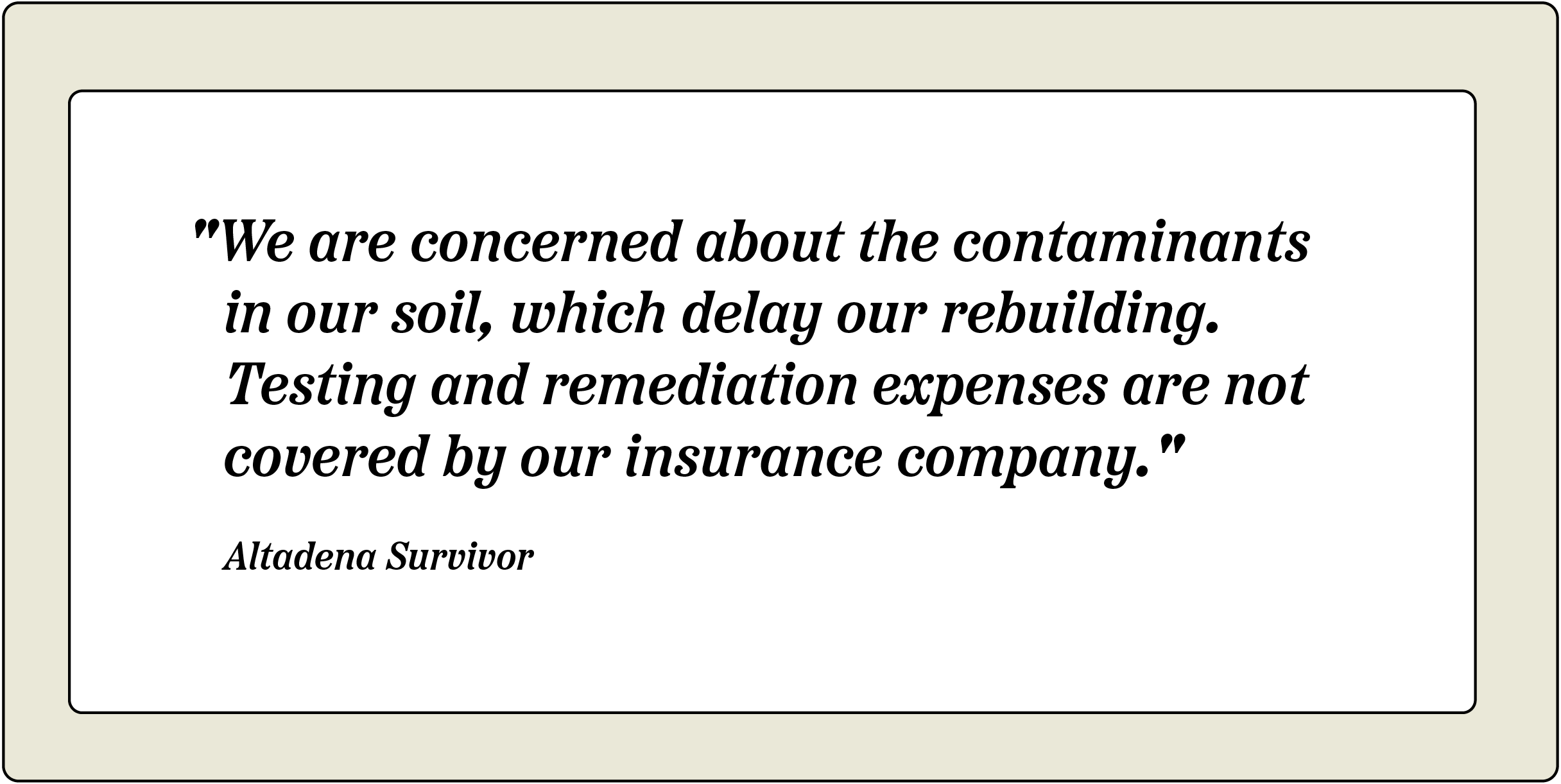
Despite steps forward, the data make clear that recovery is far from complete. Even when insurance claims move forward, and housing becomes available, environmental health determines whether recovery can proceed at all. The issue is not just having a place to live, but knowing it is safe to return.
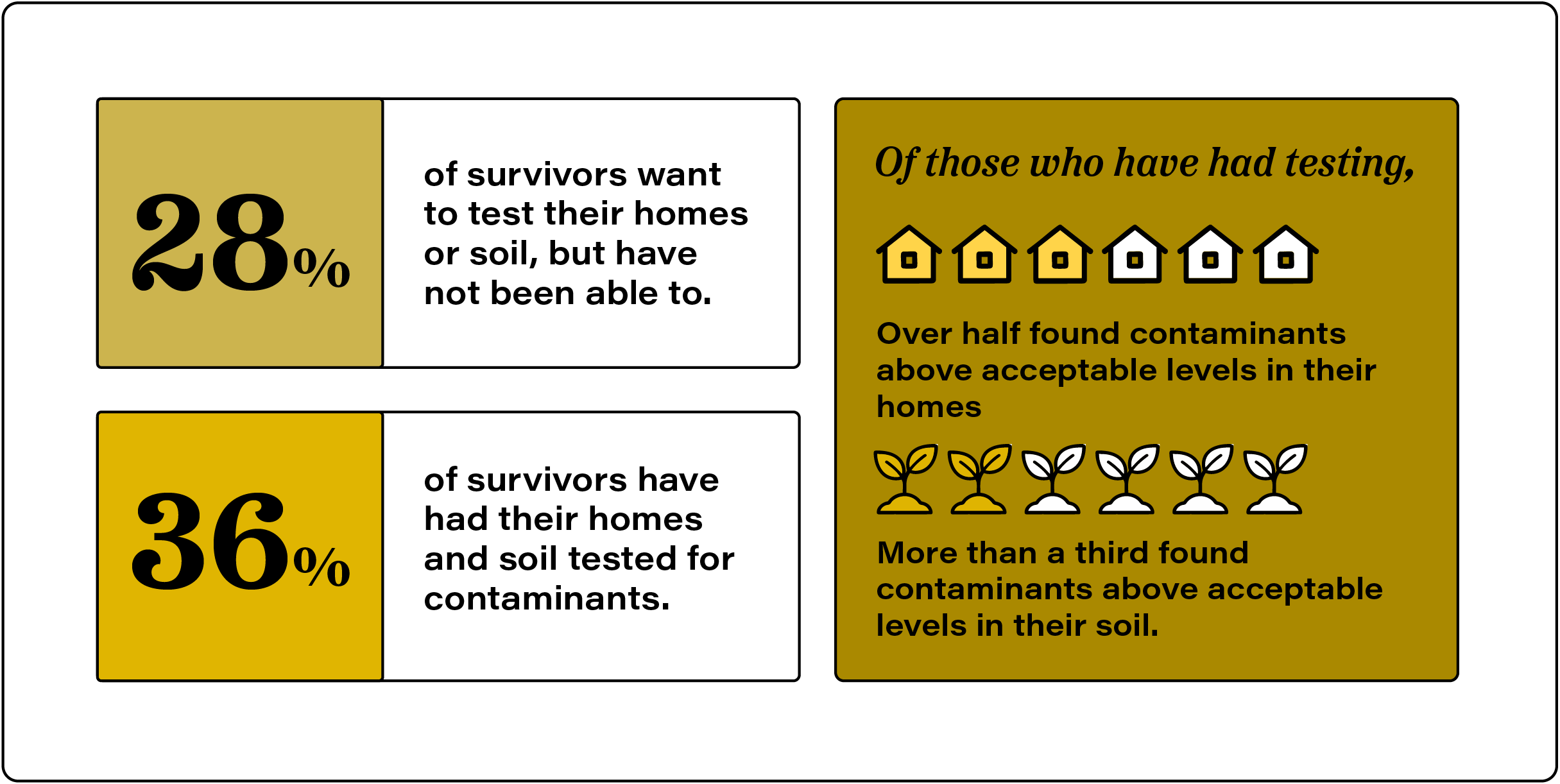
Environmental health persists as one of the most urgent concerns for survivors—in fact, demand for environmental testing exceeds access.
Just 36% of survivors who want to conduct contaminant testing on their homes and soil have been able to do so. Of those who have tested:
Over half found contaminants above acceptable levels in their homes
More than a third found contaminants above acceptable levels in their soil
For those whose homes or soil have unacceptable contamination levels, cost and insurance issues often prove to be unavoidable barriers to recovery. Nearly 30% of these survivors with actionable results have not been able to begin the process to make their homes safe again.
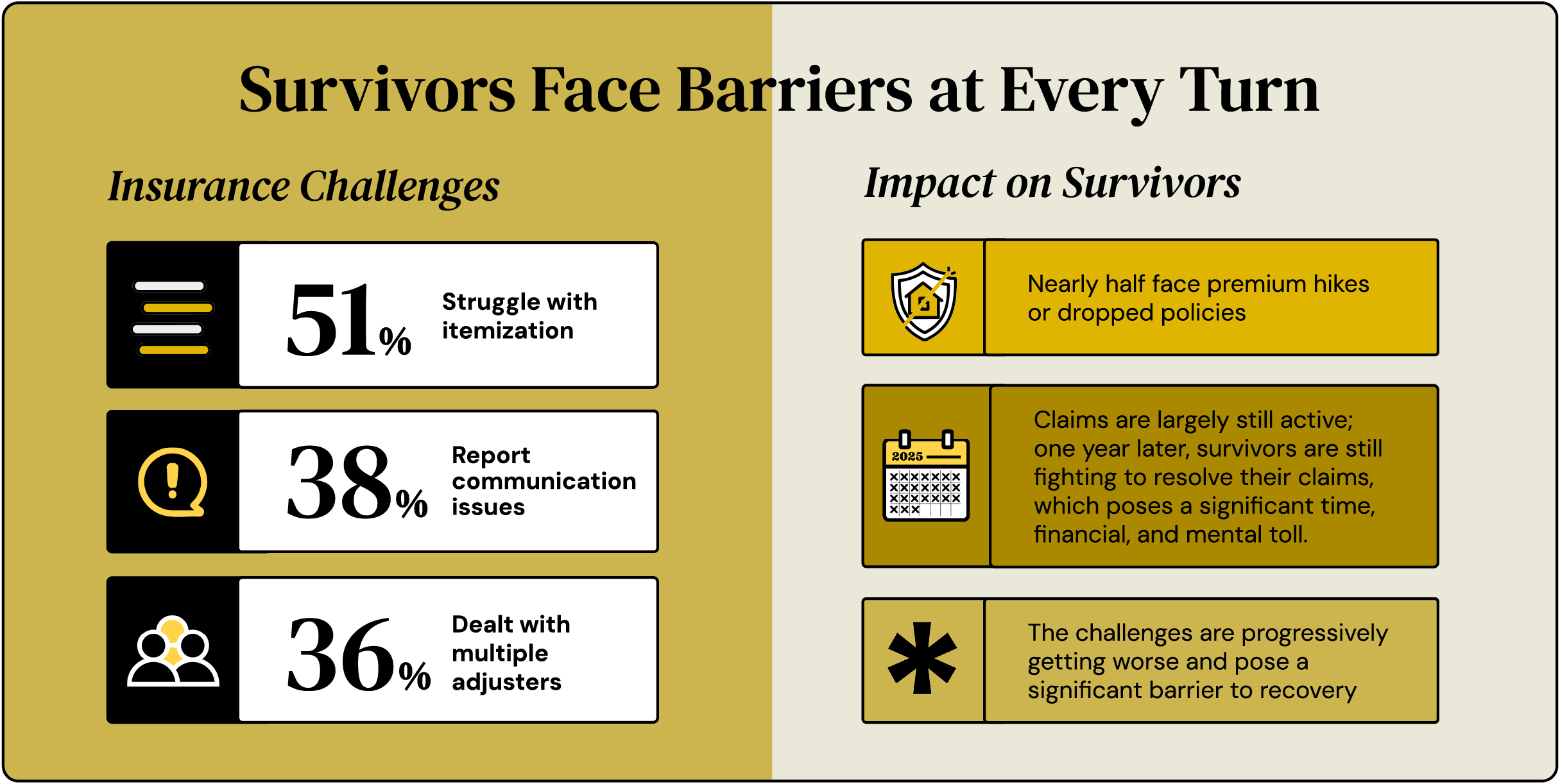
Insurance challenges continue to compound delays in recovery. Itemization lists, communication issues, and repeated adjuster changes are increasingly common, even among customers of highly rated insurers. Nearly half of policyholders are now facing additional barriers such as premium hikes or dropped coverage, leaving families vulnerable when stability is most needed.
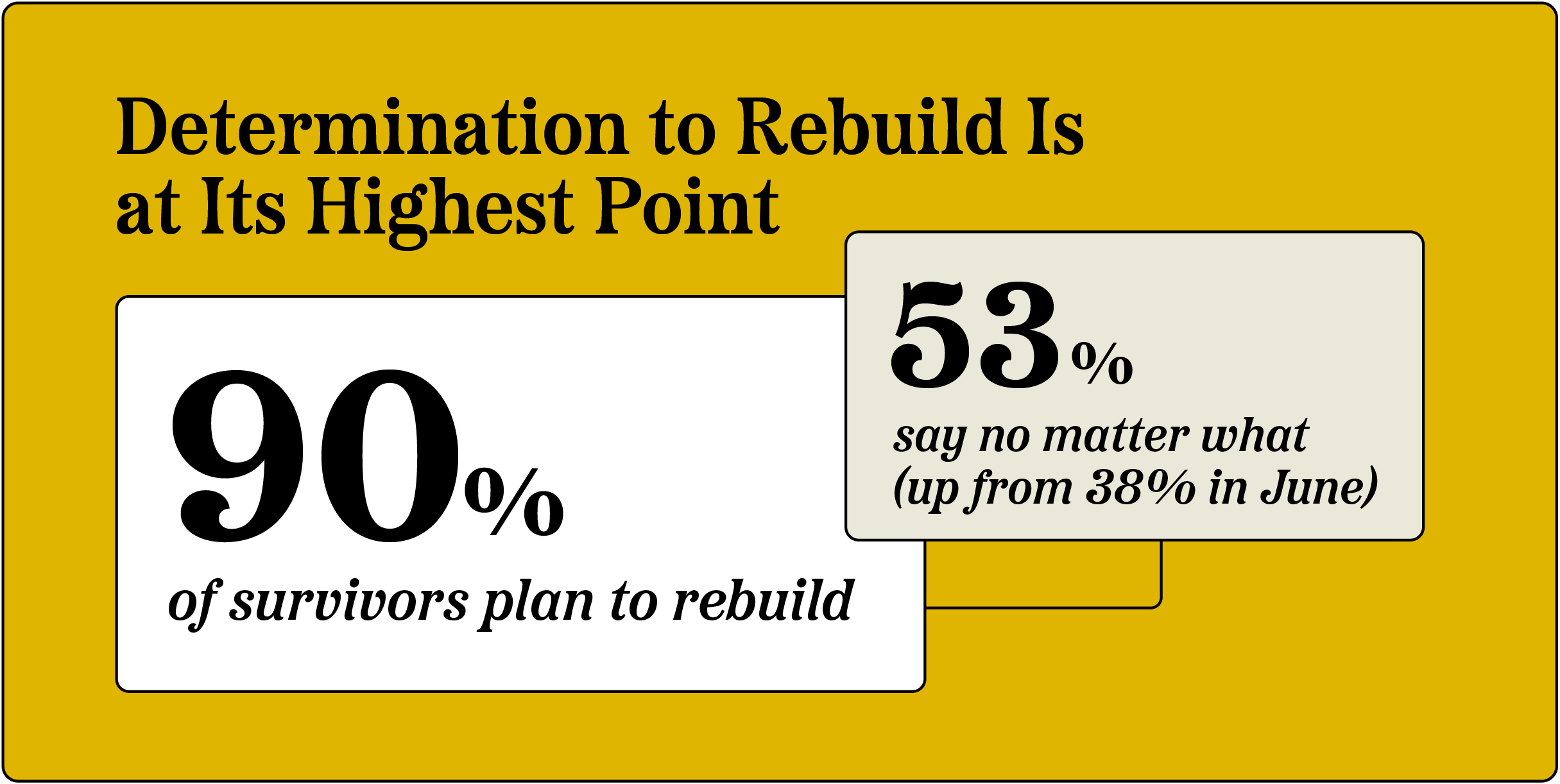
And yet, amid all of this, survivors’ determination has never been stronger. Nine in ten say they plan to rebuild, and more than half say they will rebuild no matter what, even as affordability remains a critical concern, especially for those who experienced total loss.
An Invitation Forward
One year in, recovery cannot rely on resilience alone. It requires sustained coordination across government, philanthropy, industry, and community organizations and alignment with the realities survivors are describing right now.
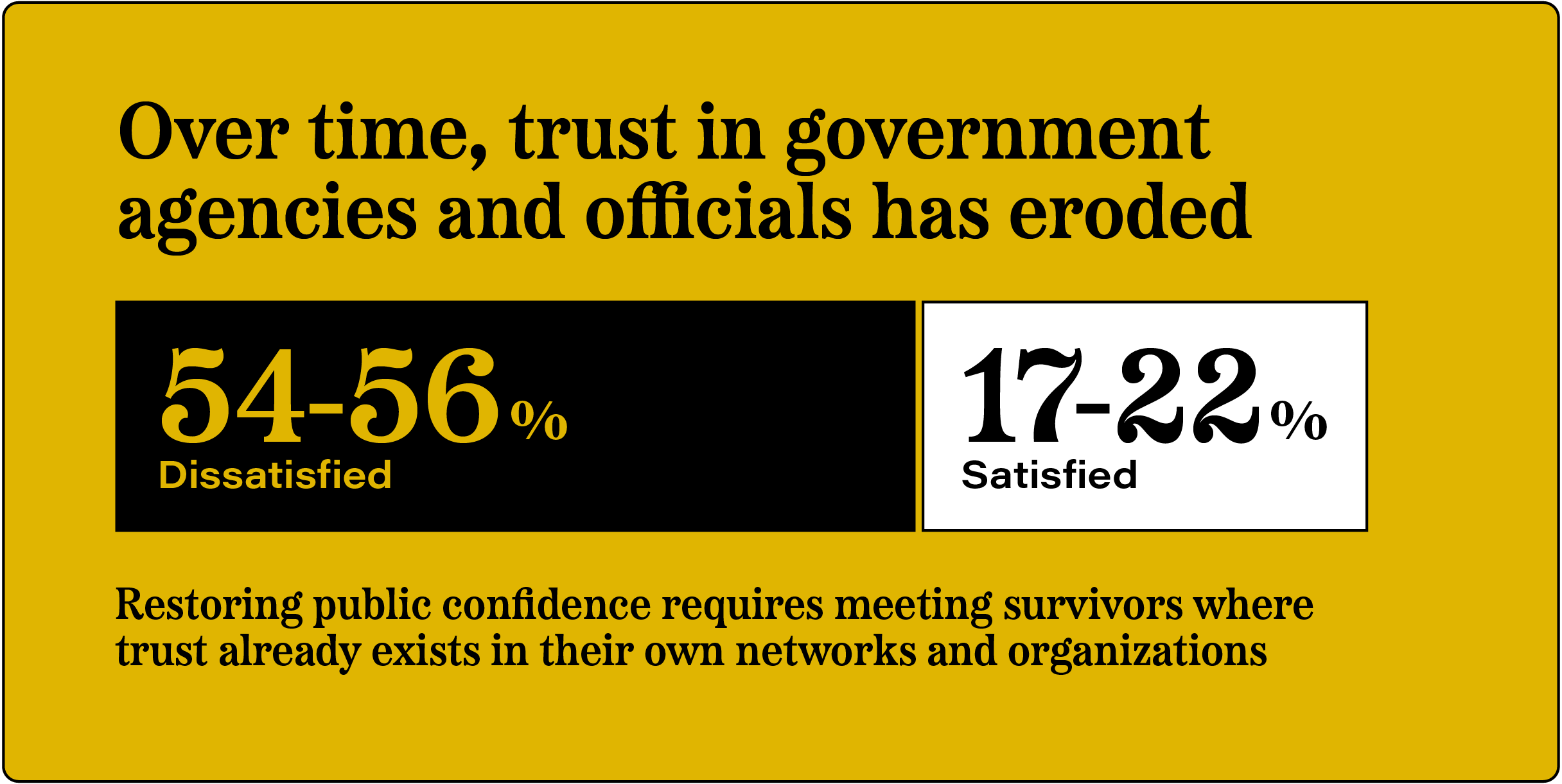
Today, over half of survivors reported dissatisfaction with government response to recovery, presenting a critical opportunity to restore public confidence in the government’s historic role in disaster relief.
But this can only happen if solutions match the reality of survivors' experiences and meet survivors where trust already exists—in their local networks and community-based organizations.
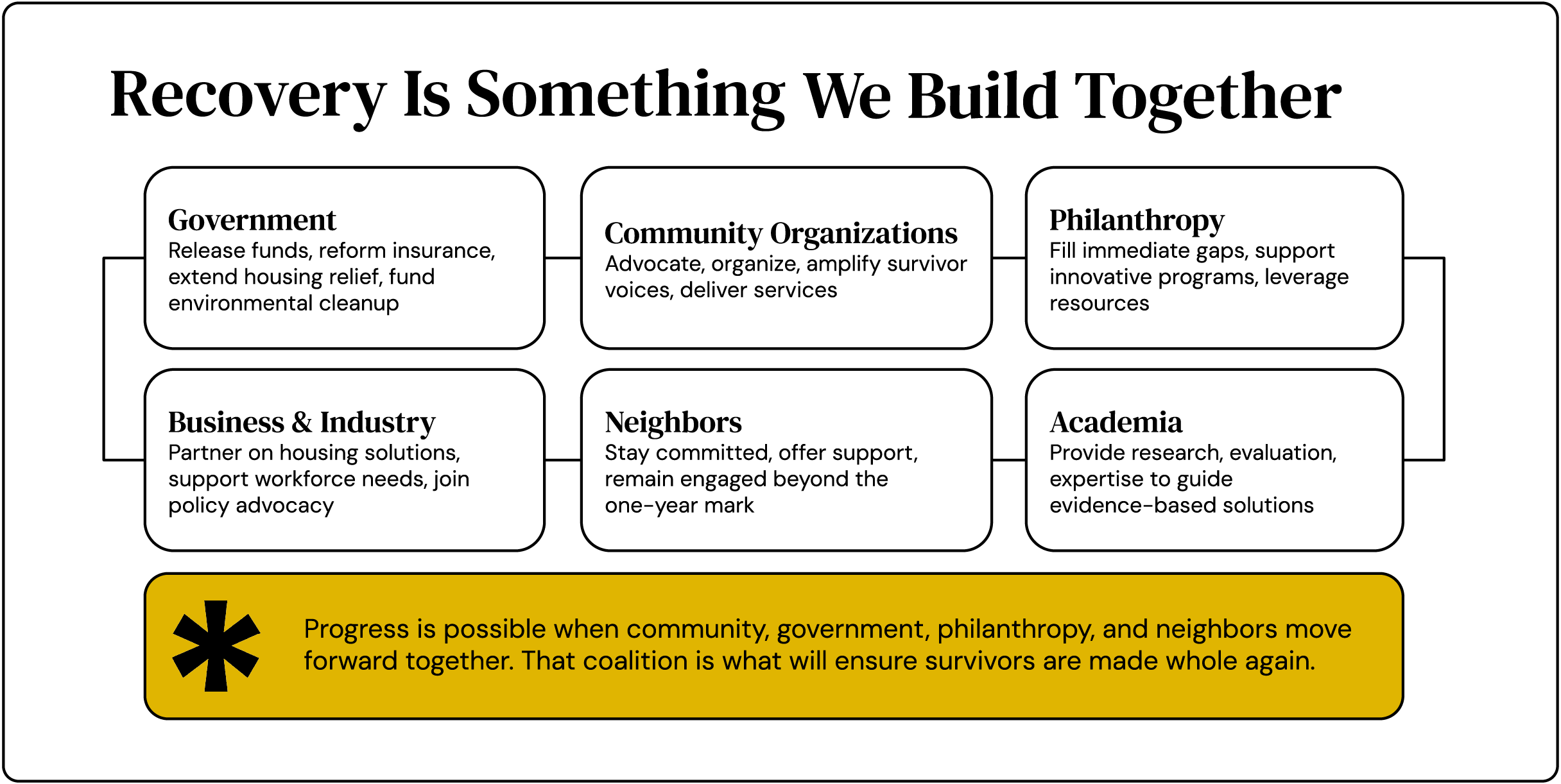
Survivors are clear about what will help most: accountable insurance systems, stable housing that reflects the actual timeline of recovery, access to environmental testing and cleanup, and policies that support rebuilding safely and affordably.
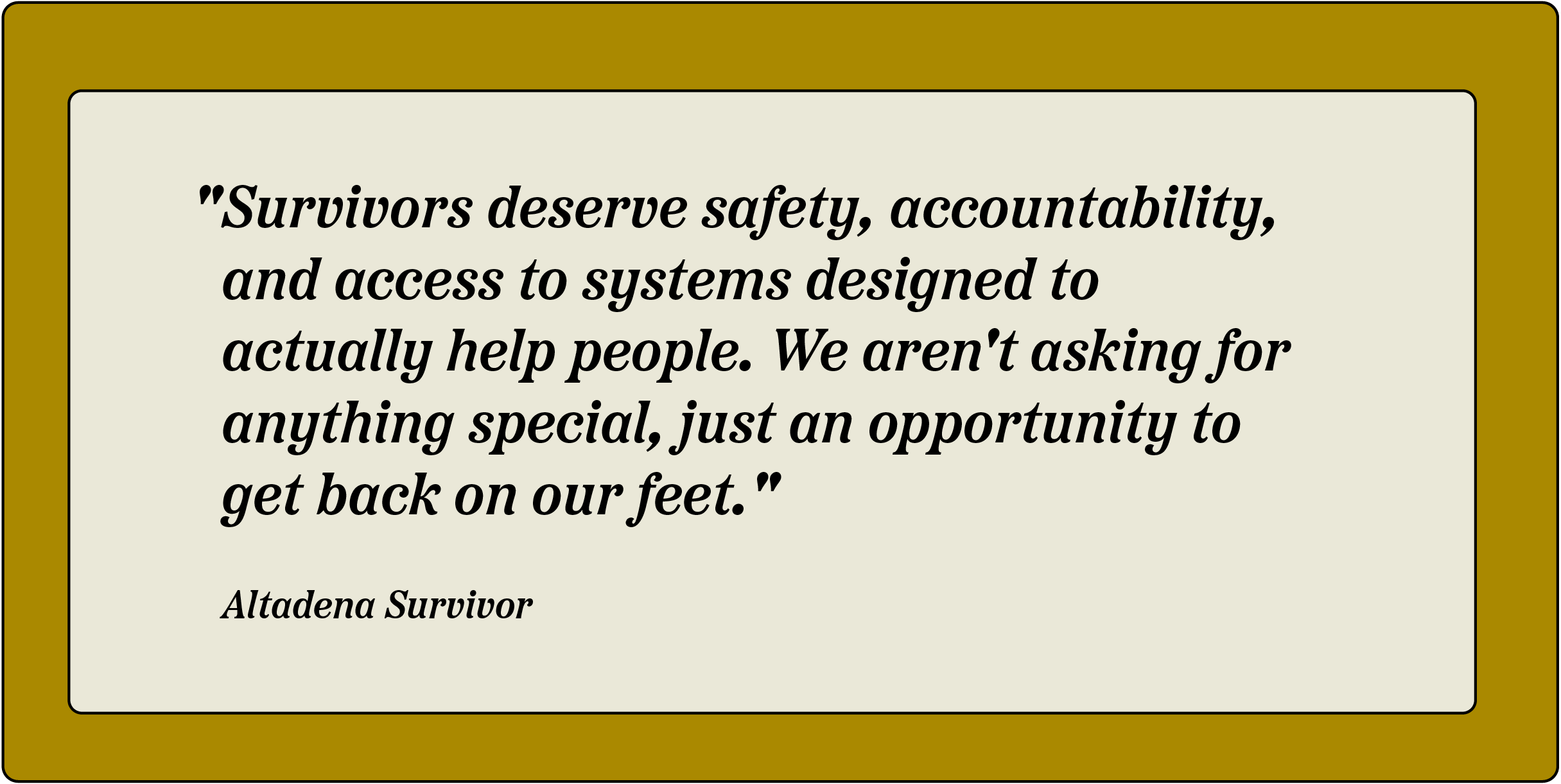
Survivors are not symbols of loss—they are experts in what recovery requires. The Community Voices report exists to ensure survivors’ experiences guide recovery decisions. Survivors are leading with clarity, determination, and vision for safer, more resilient communities.
At this one-year mark, the invitation is simple but urgent: stay engaged, stay coordinated, and stay committed to recovery for as long as it takes.
How the Department of Angels Is Responding
This survey and analysis reflect the Department of Angels’ ongoing commitment to translating survivors’ lived experiences into actionable insights that strengthen recovery coordination and drive policy change.
One year after the fires, the data shows that policy failures have real consequences on survivors’ lives; they show up as financial strain, prolonged displacement, and deepening mental health impacts for survivors and their families.
Our work centers on the outcomes survivors are experiencing now while driving solutions that address the root causes. We focus on supporting survivor-led recovery by advancing efforts that respond to the most urgent needs in this report:
Stabilizing families facing prolonged financial and emotional strain by advancing emergency and long-term housing solutions, including temporary housing options, rental protections, mortgage assistance, and grants or low-interest financing that prevent displacement, debt, and cascading mental health impacts.
Expanding access to mental health support that meets survivors where they are by prioritizing culturally specific, community-based providers, broadening available therapies, and coordinating services so survivors can access consistent, trusted care throughout recovery.
Ensuring safe, healthy homes through science-based environmental testing and cleanup by supporting free, trusted soil and home testing, accelerating remediation through public-private partnerships, and holding insurers and landlords accountable for covering cleanup so families are not forced to choose between safety and affordability.
Advancing insurance accountability and reform to close coverage loopholes, enforce fair claims handling for smoke, ash, and debris damage, prosecute unlawful delays or denials, and bridge financial gaps with loans and grants while claims remain unresolved.
Supporting fire-resilient rebuilding at the community level by investing in neighborhood-wide fire hardening, infrastructure upgrades, and rebuilding pathways that reduce future risk and strengthen long-term insurability.
Securing fair and timely federal recovery funding by urging Congress and federal agencies to expedite disaster relief, fully fund FEMA’s Disaster Relief Fund, and invest in long-term rebuilding through programs like Community Development Block Grants for Disaster Recovery (CDBG-DR) so survivors can restore homes, livelihoods, and community stability.
Together, these efforts aim to close the gap between what survivors are enduring and what recovery systems are delivering. One year after the fires, survivors should not be asked to carry this burden alone.
About This Research
The Department of Angels' fourth Community Voices: LA Fire Recovery Report is based on a survey conducted by our partners at Embold Research from November 18 to December 2, 2025, of 2,443 adults living in fire-impacted communities in January 2025.
The report builds on earlier surveys to reflect how recovery has evolved over time– highlighting where progress has been made and where challenges remain. The findings from these reports have helped guide philanthropic investments, shaped local and state policy discussions, and helped bring alignment to recovery priorities across the region.
About The Department of Angels
The Department of Angels is an independent nonprofit formed in the immediate aftermath of the January 2025 Los Angeles fires. We connect community-based organizations, government officials, civic leaders, and subject-matter experts to ensure fire-impacted communities can lead their recovery on their own terms, with the support, resources, and information they need to thrive.